

Guided visualization techniques help you shift feeling, focus, and action by using short, sensory-rich scenes that place you in the desired outcome now. You’ll settle with slow diaphragmatic breaths, a brief progressive relaxation, and a clear present-tense intention, then imagine one sensory detail plus the core emotion (joy, relief, gratitude) to anchor it. Repeat daily, pair scenes with habits, note one tiny next step, and use a simple journal or vision board to reinforce momentum — keep going and you’ll find practical tools and structures to deepen the practice.
Key Takeaways
- Use a brief spoken induction (breath focus + progressive relaxation) to enter a calm, receptive state for visualization.
- Create a present‑tense, sensory‑rich scene anchored in a clear desired outcome and strong positive emotion.
- Repeat short daily practices (5–15 minutes) for 21–30 days to reinforce neural pathways and habit formation.
- Pair visualizations with a simple ritual and an act‑as‑if behavior to translate feeling into inspired action.
- Keep a manifestation journal: set intentions, note one next action, and record gratitude or small wins after each session.
What Is Guided Visualization and Why It Works

Think of guided visualization as a gentle, spoken roadmap that leads you through a vivid, sensory scene—usually in a focused 5–15 minute session—so you can more easily evoke the emotions and images that matter to you.
A gentle, spoken roadmap: a 5–15 minute sensory journey to easily evoke the emotions and images that matter.
You’ll enter a relaxation trance through breath focus and progressive relaxation, lowering critical thought and opening your subconscious programming to new impressions.
Sensory-rich imagery in a paced script helps you form clearer internal experiences than unguided daydreaming.
Use repetition for neural change: repeated tracks reinforce joy, confidence, and clarity. As feeling shifts, you’ll notice inspired action and practical steps toward your goals emerging naturally.
The Role of Emotion in Manifestation

When you focus on how a desired outcome feels—joy, gratitude, relief—you’re giving your subconscious the signal it needs more than by perfecting every visual detail.
Emotions raise your vibrational match and make inspired opportunities and actions more likely to appear.
If a scene isn’t creating that feeling, simplify or switch techniques until the emotion comes first.
Feeling Over Visual Detail
Although a vivid picture can feel satisfying, it’s the emotion you bring that actually activates manifestation — joy, gratitude, relief or calm will prime your subconscious far more than perfect visual detail.
You’ll prioritize feeling over visual detail by cultivating emotional vividness first: breathe, recall a tiny win, or use brief gratitude to shift internal state.
Pair that feeling with a simple mental image and a few sensory cues — warmth, sound, breath — to anchor the emotion.
If a visualization feels flat, shorten the scene, amplify the feeling, and watch momentum follow through in ideas and small practical steps.
Emotions Drive Alignment
You’ve practiced prioritizing feeling over fine detail, and now the focus shifts to how those feelings steer your whole process: emotions are your internal compass for alignment, not decorative extras. You’ll use emotions are the gauge to test scenes, letting guided visualizations prompt feelings of already achieved. In daily practice, pair scene with emotion for 5–10 minutes to reprogram your subconscious mind and notice inspired action. If flat, scale back to believable feelings (comfort, curiosity) and build intensity. Be consistent, compassionate, and practical—emotion leads; imagery supports, and repetition seals the change.
| Emotion | Action | Result |
|---|---|---|
| Joy | Smile in scene | Attraction |
| Peace | Breathe deeply | Clarity |
| Relief | Soften chest | Momentum |
Preparing Your Space and Mind for Visualization

Find a quiet, comfortable spot, dim the lights, and set a 5–10 minute timer so sessions stay short and repeatable.
Remove distractions, use a simple ritual cue like lighting a candle, and take 6–8 slow diaphragmatic breaths to settle your body and mind.
Before you begin, choose one clear intention from a short prewritten list, picture the scene’s location, and evoke the core emotions you want to feel as if it’s already real.
Calm, Comfortable Environment
Create a small, dedicated spot where you won’t be interrupted for 5–10 minutes and make it inviting: dim the lights or light a soft candle, remove visual clutter, and settle into a comfortable seated or lying posture. Choose a quiet spot as your consistent environment to support daily visualization practice. Use a sensory anchor — soft music, lavender, or a smooth stone — and breathe into a relaxed posture with 6–10 diaphragmatic breaths. Keep a tiny journal nearby for intention setting and one gratitude line. This simple setup cues your nervous system and strengthens routine, making imagery more vivid and accessible.
| Item | Purpose |
|---|---|
| Quiet spot | Reduce interruptions |
| Lighting | Signal routine |
| Sensory anchor | Grounding cue |
| Relaxed posture | Vivid imagery |
| Journal | Reinforce intention |
Pre-Session Intention Setting
Intention-setting sharpens your focus and calms your nervous system, so before you begin write 1–3 clear, present-tense intentions (for example, “I am receiving a fulfilling job offer”) and place them where you’ll see them during the session to prime attention.
For pre-session intention setting, choose a quiet comfortable space, silence distractions, dim lights, and set a candle or crystal if you like.
Do a brief breathing warm-up (4–6 deep breaths or 1–2 minutes relaxed breathing).
Pick a single-focused desire from your rotating list.
Finally, use present tense affirmations and emotional anchoring—amplify one feeling (joy, gratitude, freedom) to start.
Five Guided Visualization Techniques to Try

Often you’ll find that a short, focused visualization practice can shift your mood and sharpen your focus; here are five practical techniques you can try, each designed to engage your senses, emotions, and actions so your subconscious and behavior start moving in the same direction.
Use outcome visualization daily, picturing the end result in present tense with emotion and at least three senses.
Practice mental rehearsal to imagine the steps you’ll take.
Listen to guided hypnosis or recordings to bypass resistance.
Build a vision board and perform a brief ritual.
Keep a scripting journal, read it aloud with gratitude to reinforce neural pathways.
- outcome visualization, sensory-rich
- mental rehearsal steps
- guided hypnosis/audio practice
- vision board + scripting journal
Using Guided Hypnosis to Bypass Resistance

When your conscious mind is calm, guided hypnosis helps you slip past inner resistance so suggestions about your goals can land more directly on the subconscious; by combining a brief induction (breath focus, progressive relaxation, gentle imagery) with clear, present-tense, sensory-rich phrasing, a 10–30 minute recording can make new beliefs feel familiar and actionable.
Use induction and relaxation to lower critical thinking, then deliver subconscious suggestions framed as present-tense affirmations (“I feel confident now”). Commit to daily repetition for 21–30 days to reinforce neural pathways. Choose qualified creators, avoid contraindications, and pair hypnosis with inspired action toward tangible steps.
Creating and Using a Vision Board for Daily Reinforcement
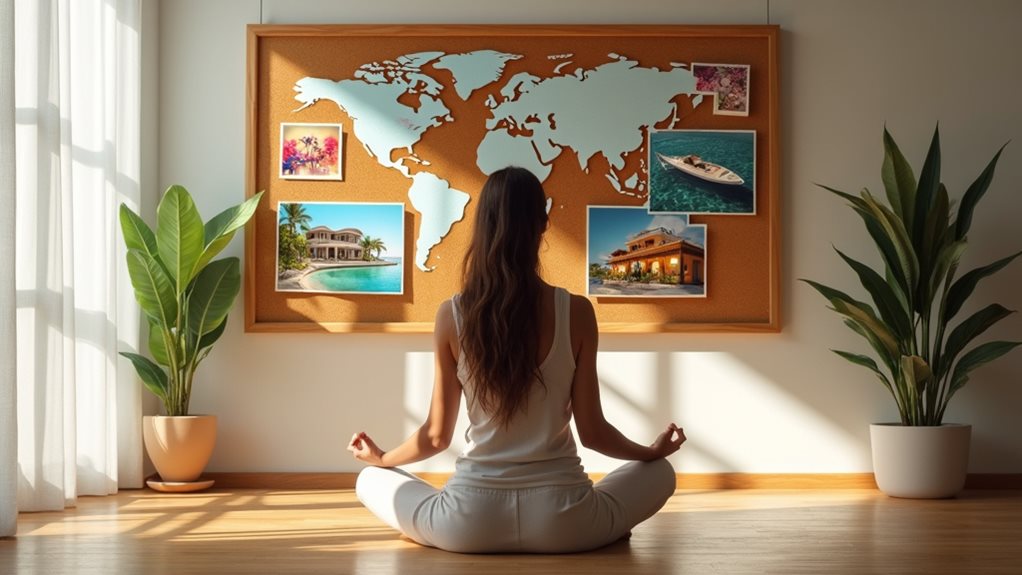
When you choose images for your vision board, pick 12–20 pictures and short phrases that clearly represent one life area so the board stays focused and powerful.
Place the board where you’ll see it at least twice daily—like your bedroom wall or phone lock screen—and make a 5–10 minute viewing ritual of deep breaths and feeling the emotions tied to each image.
Update the board every 3–6 months and treat its creation as a small ritual (music, candle, a written affirmation) to keep your intentions charged and current.
Choosing Meaningful Images
A vision board works best when every picture is chosen with intent, so pick high-resolution images that show both the end result you want and how that outcome looks in everyday life—your exact dream home, the real office setting, or the precise travel scene—so your brain can clearly recognize and accept them.
Choose 6–12 focused images per area, include one emotional anchor image center-stage, and add short present-tense affirmations (3–7 words) on or near each picture.
Place the board for daily review so it reinforces feeling and clarity. Be selective, specific, and gentle with yourself.
- High-resolution images
- Focused images only
- Emotional anchor centered
- Present-tense affirmations
Daily Viewing Ritual
Daily, spend 1–5 focused minutes with your vision board: breathe deeply, scan each image, name one sensory detail and the feeling it evokes (for example, “warm sunlight on my face — gratitude”), then read a short present-tense sentence that anchors the intention.
Place a physical or digital vision board where you’ll see it daily.
Use 10–20 clear images for one life area.
During the daily viewing ritual note inspired action ideas and write one small next step to complete within 24–48 hours.
Rotate images every 4–6 weeks to reflect growth and keep your subconscious noticing opportunities.
Close with a present-tense affirmation.
Journaling, Scripting, and the Manifestation Contract

Because your inner landscape shapes what you attract, cultivating a practical journaling and scripting routine will keep your intentions clear and your energy aligned.
You’ll keep a manifestation journal with one clear present-tense affirmation daily and feel it aloud for 2–5 minutes.
Use scripting to write a short sensory story and read it each morning for 7–21 days.
Draft a manifestation contract with your desire, three inspired actions, a gratitude clause, sign and review weekly.
Rotate five scenarios across sessions and record your script for subconscious reinforcement while falling asleep.
- Daily one-sentence affirmations
- Morning scripting practice
- Signed contract, weekly review
- Recordings for sleep
Bringing Visualizations Into Everyday Life for Inspired Action

Build visualizations into your day by pairing a short, sensory-rich scene with an existing habit (after your coffee, before your shower, or during your commute), so the practice becomes automatic and sparks practical next steps.
Habit-stack five–ten minute guided scenes, noting one concrete next action in your manifestation journal after each session.
During walks or showers, replay 30–60 second micro-visualizations to maintain emotional alignment and invite spontaneous ideas.
Use act-as-if immediately after visualizing — adopt a small behavior reflecting your desired identity to create momentum.
Complement with vision boards for clarity, then translate feelings into measurable steps you can actually do.
Community Support: Groups, Forums, and Accountability
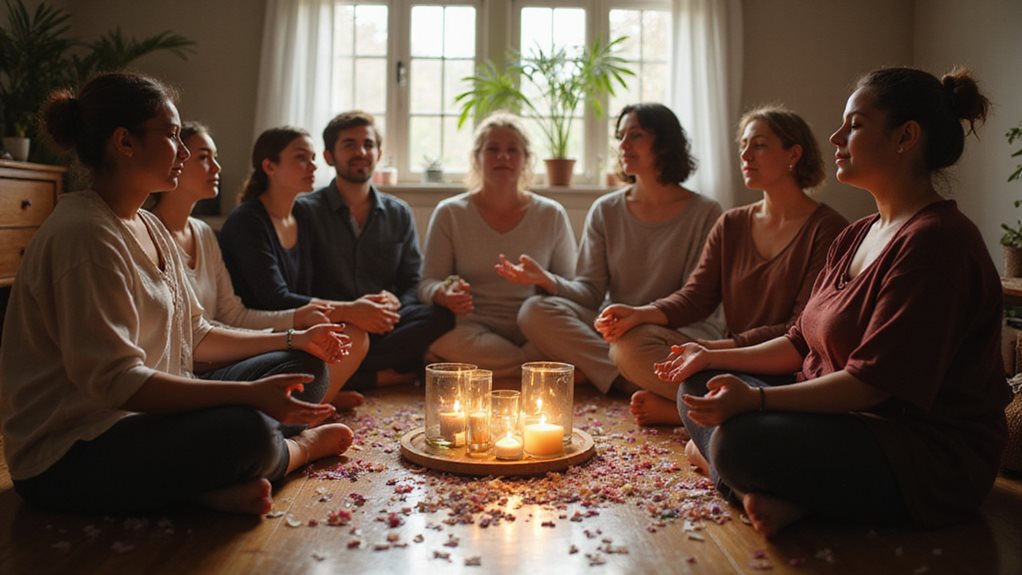
Alongside your personal practice, tap into a community that offers encouragement and predictable accountability so you don’t have to go it alone.
You’ll find manifestation groups and supportive communities that prioritize feeling-states and inspired action, helping you turn visualizations into steps.
Share short progress updates and celebrate wins to get social reinforcement without overexposure.
Choose forums with clear moderation and privacy so you can post vision board photos or scripting safely.
Use small-group accountability partners who rotate intentions and report back, creating regular check-ins that boost follow-through and keep your practice steady.
- Join manifestation groups with clear rules
- Share brief progress updates
- Rotate with accountability partners weekly
- Post vision board snippets in private spaces
Measuring Progress and Staying Consistent
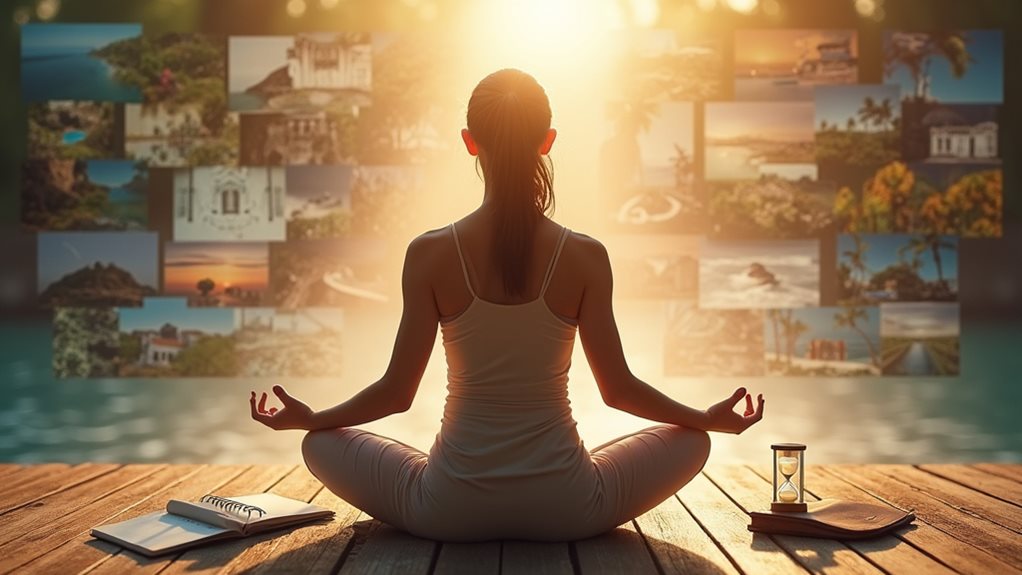
Often, the most effective way to keep your visualization practice alive is to measure both consistency and the shifts it brings, so you can see progress and adjust when needed. You’ll track consistency by logging sessions (date, duration, technique), aim for 5–10 minutes daily, and use a manifestation journal to record inspired actions and synchronicities. Rate emotional alignment before and after on a 1–10 scale. Use objective outcome metrics monthly (interviews, savings, inquiries). Set a daily trigger, rotate scenarios, and use reminders. Pair sessions with daily affirmations to sustain momentum and notice real change.
| Metric | Action |
|---|---|
| Sessions | Log date/duration |
| Emotions | Rate 1–10 |
| Signs | Journal wins |
| Outcomes | Track monthly |
Frequently Asked Questions
How to Visualize and Manifest What You Want?
You visualize and manifest by using sensory detail in daily scripting, future journaling, and vision routines; create an anchor, repeat micro affirmations, feel the success, release attachment, and take small inspired actions to make it real.
What Is the Most Powerful Manifestation Technique?
It’s guided subconscious work paired with action — you’ll get results even if you doubt. Use energy alignment, quantum scripting, mirror gazing, sensory anchoring, future pacing, and belief restructuring while journaling and acting “as if.”
What Are Some Examples of Visualization Techniques?
You can use sensory immersion, scene scripting, and emotion amplification to vividly imagine outcomes; practice anchor creation and role embodiment during rehearsals; and keep future journaling daily, so you’ll build clarity, confidence, and subconscious alignment.
What Is the 7 Manifesting Method?
The 7 manifesting method’s a structured routine where you repeat a clear intention seven times, using scripted affirmations, mirror work, night journaling, body anchoring, sensory priming and symbol creation to deepen feeling, clarity, and inspired action.
Conclusion
Picture your desired life like a sunlit path ahead — breathe, step, and feel each ray warming you. Keep practicing guided visualizations, journaling your shifts, and inviting emotion to color the scenes; these small, consistent acts build momentum. Lean on gentle accountability and short daily rituals to turn visions into motivated steps. Trust the process, notice progress, and be kind to yourself as your inner images slowly reshape the world you’re creating.