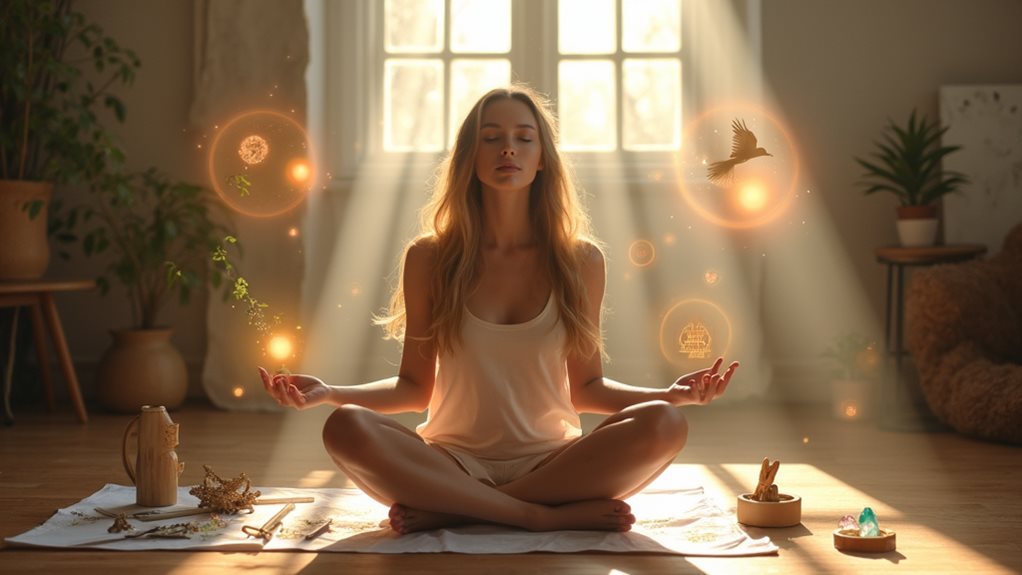
You’ll use vivid, sensory-rich scenes and short trance bursts to make goals feel real and actionable. Name one clear, heartfelt outcome, then paint it in present tense with sight, sound, touch, smell and emotion. Run 2–5 minute rehearsals, anchor the feeling with a physical cue, and capture a voice memo immediately. Turn each session into three micro‑actions you can do within 48 hours. Keep practicing and you’ll find step-by-step methods to deepen results.
Key Takeaways
- Build a vivid present‑tense scene with 3–5 sensory anchors (sight, sound, touch, smell, emotion) and rehearse daily.
- Clarify one specific measurable outcome, write it in present tense, and add the deeper “outcome of the outcome.”
- Do short timed trance bursts (10 minutes) with a 60–90 second brain dump, then capture at least three concrete ideas.
- Anchor visualizations to a physical cue (object, posture, scent) and practice morning and night for 21 days.
- Log voice memos or notes immediately, timestamp sessions, set a weekly quota, and convert top scenes into next‑step actions.
What Is Visualization and How It Powers Manifestation
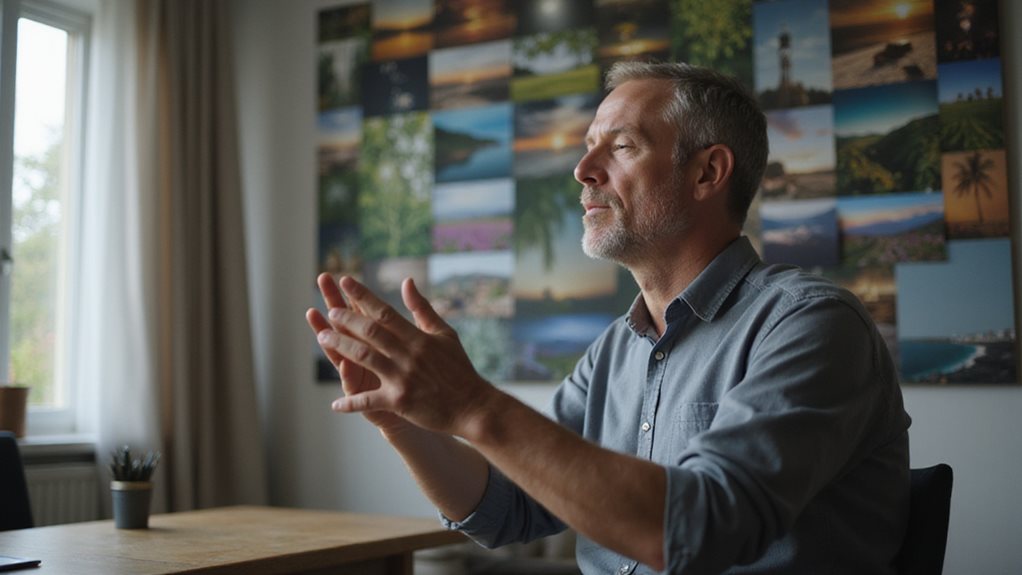
Picture the future you want as if you’re stepping into it right now: see the scene in sharp detail, hear the sounds, feel the textures, and notice the emotions pulsing through you—this is visualization, a mental rehearsal that wires your brain for the outcomes you aim for.
Step into your future now: see, hear, feel every detail—visualize vividly and let emotion wire your path to it.
You create vivid mental imagery that engages sight, sound, touch, even scent, and charge it with positive emotions like joy and gratitude.
With daily practice—timed rehearsals, a vision board, brief sensory triggers—you strengthen neural pathways, boost confidence, and prime yourself to notice opportunities.
Pair images with concrete actions to turn imagined scenes into reality.
Clarify Your Intentions: Setting Specific, Heartfelt Goals

Start by naming the exact outcome you want — what happens, when and where, and how you’ll measure it — so the picture is crisp and actionable.
Then connect that outcome to your deeper why, writing an “outcome of the outcome” line that explains how it will feel or what it will let you do.
Finally, make the goal sensory-specific (sight, sound, touch) so the intention becomes vivid and easier to pursue.
Define the Desired Outcome
Even if the future feels fuzzy, write your desired outcome in the present tense with concrete specifics—what you’re doing, when and where it happens, and measurable criteria—so you can see it clearly (for example: “I earn $75,000 a year as a freelance designer by June 2026 and work remotely three days a week”).
Now craft one focused sentence using sensory-rich language: see the light on your desk, hear client praise, feel steady confidence.
Limit to three top desired outcomes, put them where you’ll notice them, and write your goals down and share one with a trusted person.
Add the outcome of the outcome to anchor motivation.
Connect to Deeper Why
Because your goals gain power when they’re rooted in real reasons, carve out a quiet five to ten minutes to dump everyday clutter—bills, errands, to-dos—so your mind can reach the honest motive beneath the surface.
Write your goal in present tense and add the outcome of the outcome: why it matters.
Limit to 1–3 clear targets with metrics.
Share them with a trusted friend for accountability.
Use visualization techniques and practice visualization daily to feel confident.
Ground intentions in sensory experiences and feelings so the desire vibrates.
- Warm kitchen light
- Laugh at bedtime
- Crisp calendar date
- Measured income goal
- Gentle shared promise
Make Goals Sensory-Specific
Picture your goal as a small, vivid scene you can step into: write it in present tense with sensory detail — the golden light on your desk, the soft clink of coffee cups, the exact job title and monthly figure — and explain the outcome of the outcome so it’s tethered to why it matters (security, creativity, time with family). You create a present-tense goal with visualization and sensory anchors to rehearse a vivid mental image. Share measurable facts and 3–5 anchors, rehearse them daily, and tell a trusted ally for accountability.
| Anchor | Example |
|---|---|
| Sight | Sunlit studio |
| Sound | Coffee clink |
| Smell | Fresh beans |
| Outcome | Security, joy |
Sensory-Rich Visualisation: Paint the Scene in Detail

Close your eyes and build one tight scene, naming five sensory details so you can see, hear, smell, touch, and feel the temperature of your goal’s world. Anchor the emotion you want—say “calm pride”—and pick three physical cues in the scene (light, posture, a specific object) that signal that feeling. Practice a 3-minute sensory sweep daily, adding one precise detail each session so the image grows richer and ready to guide your next move.
Engage All Senses
Clarity comes when you call up a scene with all five senses: name the exact shades of light on a late-winter pebble beach, feel the cold grit under your bare feet, hear gulls and a distant engine hum, smell briny spray and warm coffee from a nearby thermos, and taste the metallic tang of the sea on your tongue.
You engage all your senses in a present tense sensory script, using emotional labeling and micro-actions to rehearse success. Imagine:
- pale gold sunlight slicing low across wet pebbles
- cold grit pressing between toes
- distant engine, sharp gull calls
- warm coffee scent, saline spray
- a relieved swell in the chest as you step forward
Anchor With Vivid Detail
When you anchor your goal in a single, vividly detailed moment—mid-afternoon light slanting through a specific window onto the exact title on your finished book’s spine—you make that future neurologically real; name the color of the light, the texture under your hand, the precise number on your salary offer, the taste and temperature of the coffee you’ll be holding, and the exact feeling (proud, elated) at a rated intensity to amplify the brain’s motivational wiring.
Close your eyes, spend 2–5 minutes on vivid mental visualization, anchor with time and place, list colours, sounds, textures, smells, tastes and temperature.
Repeat daily for 21 days, record a 60–90s audio, state emotional intensity.
Emotional Amplification: Infusing Images With Feeling

Emotion will give your mental images the force to move you — so intentionally name the primary feeling you want to carry (relief, pride, joy) and hold it as you picture the scene.
You use visualization with emotional intensity, adding sensory anchors and present-tense narration to make goals palpable.
Breathe, embody the feeling, and repeat as daily practice.
Imagine:
- The applause echoing, warm in your ears.
- The smooth weight of a completed portfolio in your hands.
- The coffee aroma in your new office.
- A proud smile and chest expansion as you speak.
- The textured paper of your signed contract.
Practice two to five focused minutes, morning and night.
Short Trance Sessions to Surface Original Ideas

Wake up your morning edge with ten-minute trance bursts that you’ll schedule when your alertness is highest, using a short sensory primer like a brisk walk or loud music to flip your mind into associative mode.
Switch off distractions, give yourself a single focused prompt, and force a capture-first habit—pen or voice memo at the ready—to record at least three distinct ideas before judgment can show up.
Repeat these short sessions regularly and you’ll train a steady pipeline of original options instead of waiting for rare inspiration.
Ten-Minute Trance Bursts
Often you’ll start the day with a rapid, deliberate ritual: clear your mind with a 60–90 second brain dump, cut your phone and internet, then trigger a light trance—hot shower, loud music, or brisk walk—before sitting down for a tight 10-minute burst.
You’ll schedule trance bursts when you’re sharp, use a sensory trigger to slip beneath chatter, then attack a focused micro-goal.
Force output into a voice memo or notebook and repeat 3–5 times with short rests.
Visualize vivid outcomes, then save raw gems for iteration.
- steam and rhythm
- sudden melody
- sunlit pavement
- blunt pen strokes
- clipped voice notes
Capture-First Habit
After you finish a quick trance burst, lock in a capture-first habit: set aside 10–20 minutes each morning when your mind is sharp, give yourself permission to chase odd associations, and force whatever surfaces into a notebook or voice memo before critique can kill it.
Begin with a brief brain dump to clear clutter, use a sensory trigger to prime a creative trance, then run short timed sessions with a hard tiny deadline to spark hyper-focus.
Turn phone off, record immediately, and log the top idea.
Over weeks this daily practice builds a searchable library, sharpening visualization and surfacing original concepts.
Writing and Free-Form Prompts to Lock in Direction

Start each session with a five‑minute brain dump—write nonstop everything cluttering your mind—so you clear obligations and step into creative focus.
You then write outcomes in present tense with vivid sensory detail, using visualization to feel success now. Practice the 369 method to anchor belief. After ten minutes of free writing, extract ten concrete next steps to move from image to action.
- a bright, sold‑out room
- warm applause on your skin
- crisp emails sent to collaborators
- a tidy list of micro-tasks
- a calendar blocked for rehearsals
These prompts lock direction and cultivate momentum.
Story-Based Exercises to Build Narrative Momentum

When you pick an emotive anchor like awe and pair it with a concrete phrase—“first day at my dream job”—you step into a tiny, sensory-rich world that pulls your goals into story form; close your eyes, feel the hum of fluorescent lights, the weight of your badge, the warmth of a welcoming hand, and then write one focused paragraph describing who was there, what shifted, and how it landed in your body.
Use creative visualization to craft a vivid mental image, then list ten beats by asking “what happens next?” Build a mini mind map of sensory details, run regular story trance sessions, and save the strongest scenes to fuel narrative momentum.
Environment and Routine: Designing a Creative-Friendly Space
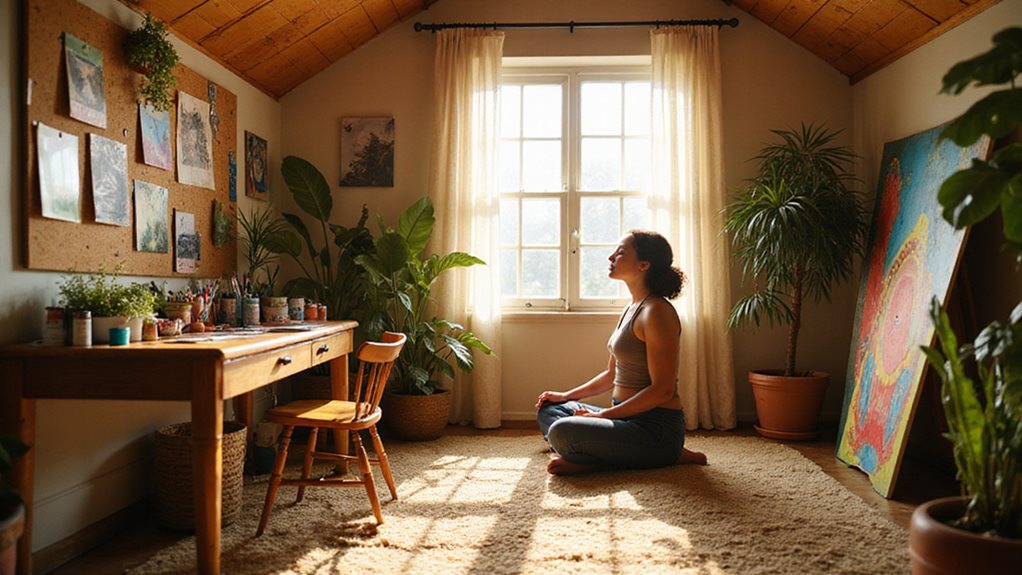
If you want ideas to surface reliably, shape a morning-ready workspace that cues focus and minimizes friction: block a 90– to 180‑minute slot before 9am, silence Wi‑Fi/notifications or use airplane mode, and keep a small notebook or offline voice recorder within arm’s reach so emergent thoughts get captured instantly; surround yourself with gentle triggers—a single inspirational image, natural light, minimal clutter, and a stimulation-rich micro-environment like a hot-shower nearby or a short walking route—so your brain slips into sustained trance without feeling trapped or distracted.
- sunlit desk, single photo
- warm shower, brief walk
- simple, ordered tools
- offline idea-capture tool
- silence for zero distractions
Commit to early-morning creative sessions and a dedicated creative routine that cues flow and honors momentum.
Capturing and Tracking Progress: Notes, Audio and Habit Tools
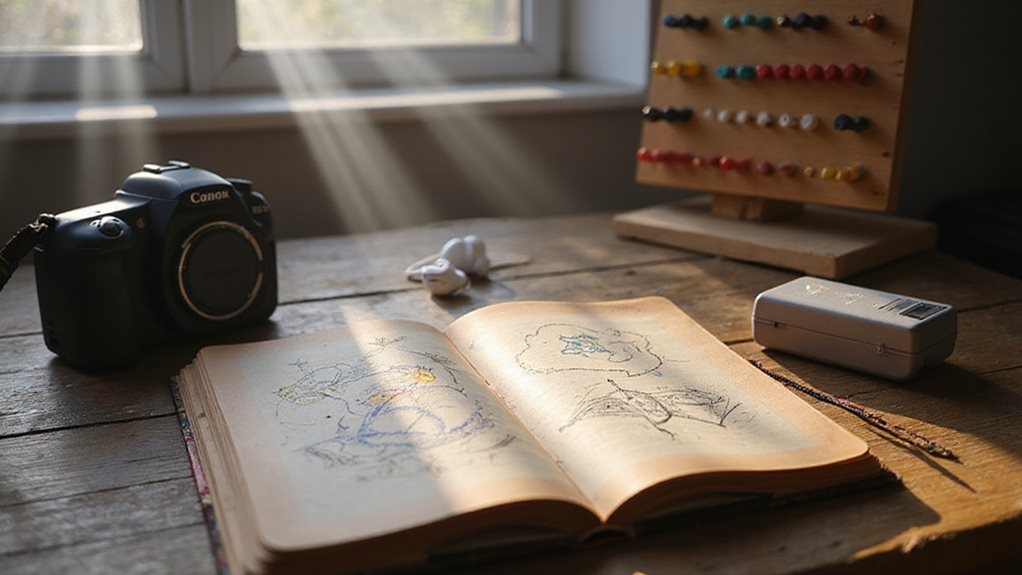
Because ideas vanish as quickly as they arrive, capture them immediately in one dedicated place so your creative trail stays intact and searchable. Use a single idea capture notebook or app, timestamping entries with goal and session type so patterns emerge.
After each visualization, record short voice memos to preserve sensory detail — audio’s faster and truer than typing. Pair notes with simple habit tracking and a clear quota (e.g., 3 visualizations/week) and review monthly.
Every 2–4 weeks migrate promising entries into a project roadmap with next steps and deadlines, and share key written goals with an accountability partner.
Turning Visualisations Into Daily Actions and Small Wins

You’ve captured the spark — now turn that vivid image into tiny, win-ready steps you can actually finish. After a 5–10 minute use visualization, write three concrete next step actions to complete within 48 hours. Pair each session with a single SMART measurable outcome and a present-tense affirmation you read aloud each morning. Use timed trance work (10–60 minutes), then record one takeaway. Break goals into micro-wins worth 5–25 minutes and track them daily in a simple checklist to harvest momentum and dopamine.
- Email one contact
- Draft a 300-word outline
- Book a 30-minute practice slot
- Sketch one scene
- Submit one proposal by Friday
Frequently Asked Questions
What Is the 10-10-10 Rule for Manifesting?
The 10-10-10 rule for manifesting asks you to future script outcomes for 10 days, 10 months, 10 years, using daily check ins to keep energy alignment, sharpen decision clarity, and boost emotion calibration so you act toward vivid goals.
How to Use Imagination for Manifestation?
You harness imagination by sensory detail, future pacing, and emotional amplification: script a vivid narrative, include symbolic objects, rehearse daily in present tense, note three next steps, and commit to one action within 24 hours to manifest progress.
What Are the 7 Rules of Manifestation?
The 7 rules are: intention clarity, belief alignment, sensory vividness, energy calibration, resistance release, action momentum, and consistent accountability — you’ll feel energized, stay focused, take bold steps, and trust the process as results unfold.
How to Do Visualization for Manifestation?
You visualize by crafting vivid sensory detail, using mental rehearsal daily practice to replay success scenes, anchoring emotions like joy, and future pacing outcomes into present-tense images; you’ll feel motivated, focused, and ready to act.
Conclusion
Think of your imagination as a garden: each visualization plants a seed, each emotion waters it, and every small action is sunlight coaxing growth. Keep your intentions clear like a gardener’s plan, sow sensory-rich scenes, and tend them with short trance sessions and story-led routines. Track sprouts with notes and rewards, then harvest progress through daily micro-steps. Nurture this ritual and your goals will unfurl into living blooms you can touch, taste, and live.